Quick Links:
Summer in Australia leaves a mark. It lingers in fading tan lines, freckles that seem darker than before, and the memory of long afternoons outdoors. Even when we try to be sun smart, our summer skin absorbs more ultraviolet (UV) radiation than we often realise.
What many people don’t see immediately is the cumulative impact of that exposure. UV damage builds quietly over time. It may not be visible at the end of the season, but it can contribute to skin changes months or even years later.
That’s why post-summer skin checks are such an important health habit. Skin cancer is Australia’s most common cancer, and most cases can be successfully treated when found early. Early detection and regular checking are essential.
This guide explains what happens to your skin after summer, why regular skin checks matter, how to check your skin properly, when to see a GP or dermatologist, and how HIF supports members with tools that encourage early action.
We all know a severe sunburn can be a warning sign, but sunburn is only part of the story. UVB radiation directly damages DNA, while UVA penetrates deeper into the skin, contributing to both premature ageing and increased cancer risk. Even when the redness fades, the damage can remain.
Most skin cancers develop gradually over time, not just after one bad burn. Many cases are linked to cumulative sun exposure across years, which is why it is worth paying attention to more than just obvious signs of damage.
That is where a small shift in mindset matters. Instead of asking, “Did I burn badly this summer?”, a better question is, “Has anything changed?” Framing it this way makes summer skin care less about reacting after the fact and more about staying aware and proactive.
Australia does not have a national skin cancer screening program, which means early detection often comes down to people noticing changes in their own skin and getting them checked. Cancer Council recommends becoming familiar with what is normal for you, so it is easier to spot anything new or unusual. That matters because early skin cancers, including melanoma, often do not hurt or cause obvious discomfort. They may simply show up as a new spot or as a subtle change in an existing mole.
That is why waiting for symptoms is not a reliable approach. After a summer of higher UV exposure, booking a Skin Check is a practical way to stay on top of any changes and catch potential issues early.
The idea of a full-body check can sound clinical, but it does not need to be.
Once a month, in good lighting, take ten minutes to look at your skin carefully. Use a mirror for hard-to-see areas. Ask someone to help check your scalp and back if needed. You are not looking for perfection. You are looking for change.
Health authorities commonly refer to the ABCDE guide:
- A for asymmetry
- B for border irregularity
- C for colour variation
- D for diameter larger than 6 millimetres
- E for evolving size, shape or colour
The most important letter is E. Evolving. If something is new, changing, not healing or simply does not look like the rest of your spots, it deserves professional review.
Some people choose to use digital monitoring tools, such as SkinVision, to photograph and track spots over time. These tools can support awareness and help you notice change more clearly, but they do not replace a professional medical assessment. Eligible HIF Members who are 18 years or older with active Extras, Hospital, or Combined cover can activate a fully funded 12-month subscription with SkinVision until 1 December 2026.
If you feel unsure, that alone is reason enough to book an appointment with your doctor.
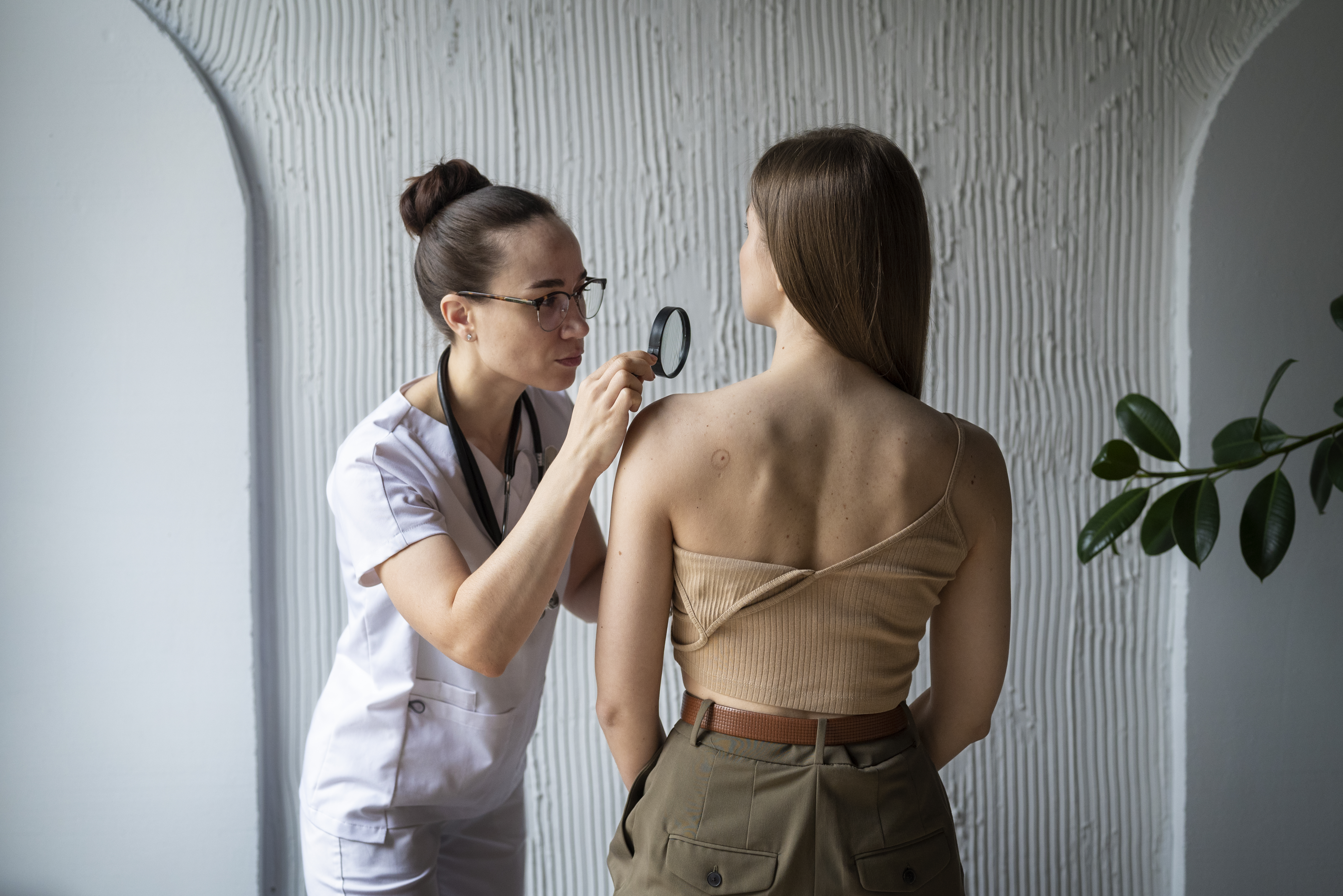
Self-checks build awareness. Professional skin checks provide clinical certainty. A GP or dermatologist can examine your skin using specialised tools such as a dermatoscope, which allows detailed assessment of pigmented lesions. Most appointments are straightforward and relatively quick.
You should book a review if you notice:
- A new mole that looks unusual
- A spot that changes in size, colour or shape
- A lesion that does not heal
- Bleeding, crusting or persistent itching
Some people benefit from more frequent checks. Risk increases if you have fair skin, many moles, a family history of melanoma, previous skin cancer or significant outdoor exposure.
This is also why workplace sun safety measures are so important across Australia. Outdoor workers, particularly in industries such as agriculture, transport, building and construction, are often exposed to much higher than recommended levels of UV radiation, making employer-led sun safety policies, awareness, and prevention strategies especially important.
If you are in a major city, access is generally strong. Clinics offering skin checks Perth residents can access are widely available across Western Australia. Location should not be a barrier to preventative care.
Prevention does not stop when summer ends.
Cancer Council recommends using sun protection whenever the UV index is 3 or above. In many parts of Australia, that threshold is reached even in cooler months. Effective summer skin care includes:
- Daily SPF 50 plus sunscreen
- Protective clothing
- Seeking shade during peak UV hours
- Wearing hats and sunglasses
- Avoiding solariums
These habits reduce cumulative damage over time.
At HIF, we recognise that early detection and prevention play an important role in long-term wellbeing.
Regular skin checks form part of a broader preventative health approach. Depending on your level of cover, eligible members may be able to claim benefits for certain consultations.
HIF also partners with SkinVision to support digital skin monitoring. SkinVision allows members to track skin spots through the app and have a panel of certified dermatologists review the image to provide additional guidance.
Summer leaves visible memories. It can also leave invisible impact. Post-summer skin checks are not dramatic. They are deliberate.
A practical way to think about it is this. We service our cars after long road trips. We check smoke alarms routinely. We book dental appointments even when nothing hurts. skin checks sit in the same category. They are maintenance.
Living in Australia means living with high UV exposure. Regular checks acknowledge that reality. Rather than avoiding the conversation, they offer reassurance. Most spots reviewed by doctors turn out to be benign. When something concerning is detected early, treatment is often straightforward. Clarity reduces anxiety. Avoidance increases it.
If it has been some time since you last reviewed your skin, consider performing a self-check this month. If anything looks different, book an appointment. Searching skin checks near me can help you find services close to home. Awareness is not excessive. It is practical.