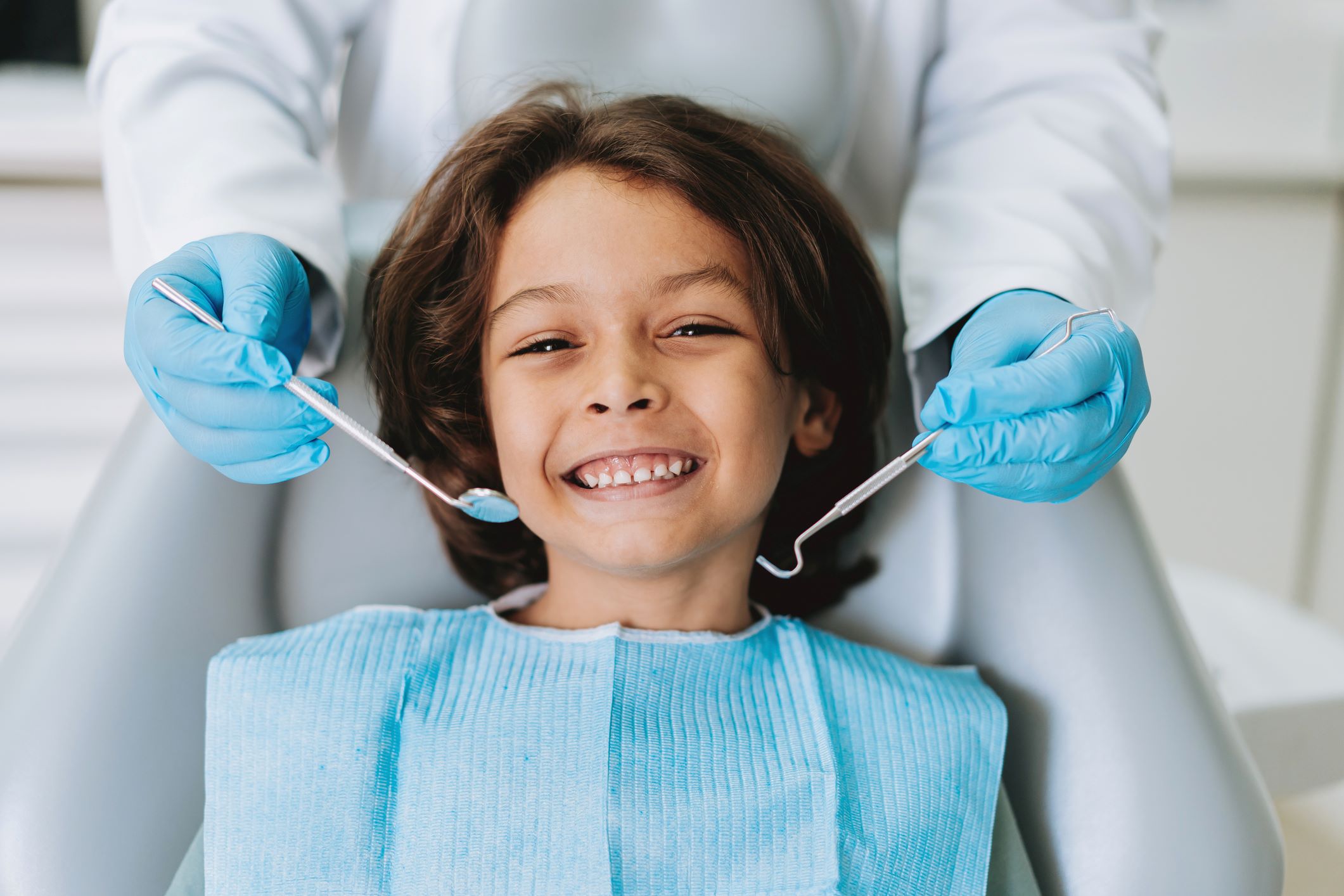
Many parents are surprised to learn that a child’s first visit to the dentist is recommended long before school age. The widely accepted guideline is that a child’s first visit to the dentist should be by their first birthday or within six months of the first tooth erupting. This is based on evidence that suggests early dental assessment reduces future dental disease by identifying risk factors before they progress.1
What happens during your child’s first dental visit
A child’s first dental visit is intentionally gentle and non-invasive. Most examinations take place with the child seated on a parent’s lap for an assessment of the teeth, gums, bite and oral tissues.
As clinicians, we look for early signs of decay, enamel defects, tongue tie and frenal attachments that may affect feeding, and any variations in normal growth patterns of the teeth and jaw.
The importance of primary teeth
Parents sometimes question the importance of primary teeth or “baby teeth”, assuming they are less important because they are eventually replaced. This is a common misconception.
Primary teeth play a critical role in guiding jaw growth, maintaining space for permanent teeth, supporting speech development and allowing proper nutrition.
Critically, infection or trauma to the primary teeth can impact the permanent teeth developing beneath them. It can also cause pain which can affect a child’s willingness to eat and maintain good oral hygiene habits due to discomfort during eating and brushing.
Keeping the primary teeth healthy and free of disease is therefore very important for not only a child’s oral health but overall health as well.
Early oral health education
During a child’ first dentist visit, education is just as important as examination.
Parents should receive guidance on brushing technique, appropriate use of a fluoridated toothpaste, risk factors for early childhood caries, habits (such as thumb sucking or dummy use), and diet. These early conversations have a measurable impact on oral health outcomes, particularly in reducing rates of tooth decay in children.
Positive dental experiences
Another powerful aspect of early oral health care is behavioural.
Establishing positive dental experiences and allowing the child to become familiar with the dental environment in infancy reduces anxiety later in childhood and helps foster lifelong dental attendance patterns.
Children who are introduced to the dental environment from a young age typically demonstrate greater cooperation and significantly lower rates of dental fear.
Parents should not wait for symptoms to appear before seeking dental care for their child. Early evaluation isn’t just about identifying major problems, it’s about prevention, guidance, and supporting healthy oral development. Learn more about denatl health insurance.
1 American Academy of Pediatric Dentistry (AAPD) 2019, Guideline on infant oral health care, Pediatric Dentistry, vol. 41, no. 6, pp. 202–210.