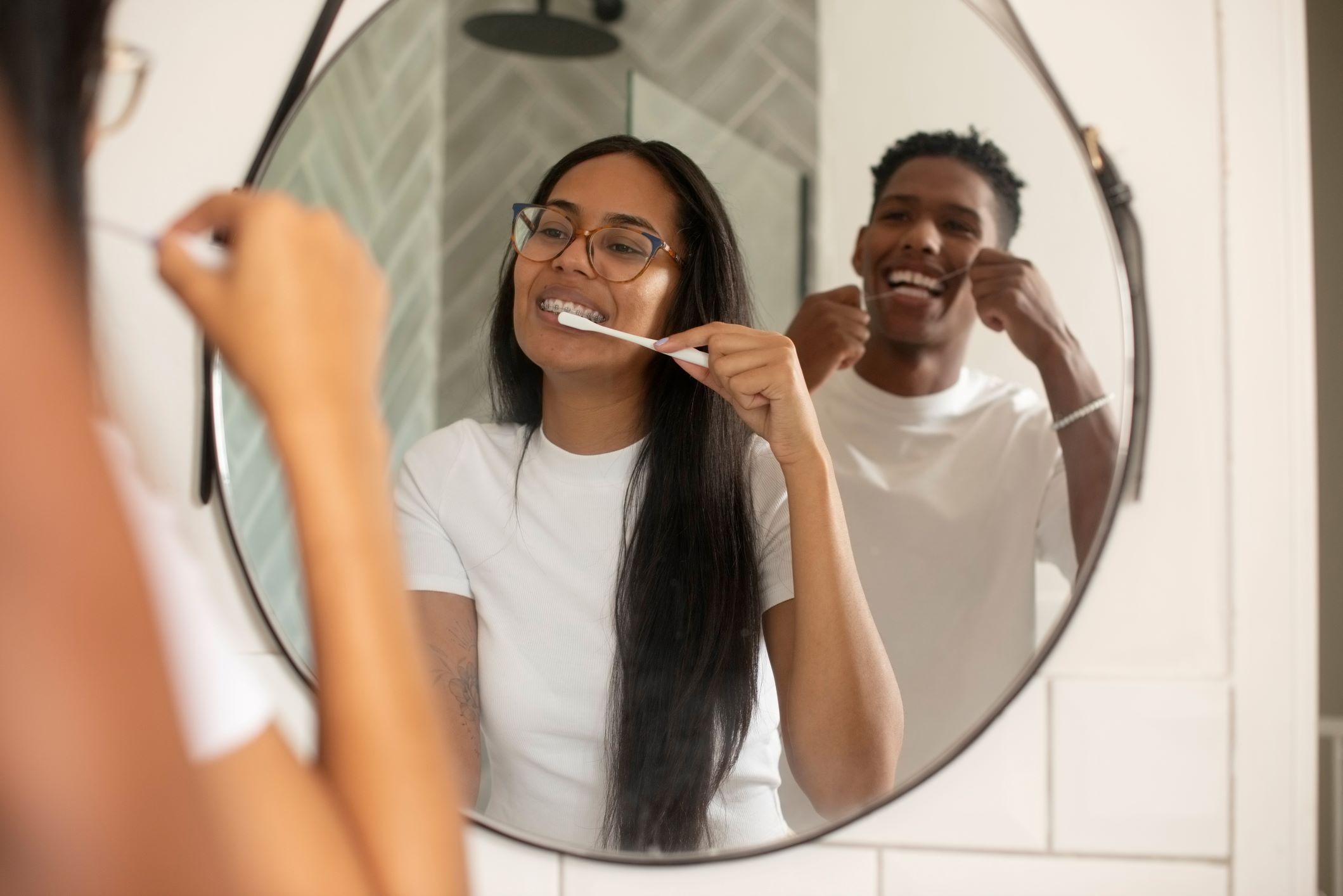
An effective dental routine doesn’t need to be complex or time consuming.
A targeted five-minute routine performed consistently is one of the most reliable ways to maintain oral health and protect the teeth and gums in the long term.
For patients wondering how to improve oral health, the answer is by consistently removing plaque from the teeth, at the gum margin and the areas between the teeth.
Two minutes: Tooth brushing
First, two minutes of brushing the teeth and gums using a fluoride toothpaste and manual or electric toothbrush.
Focus on angling the bristles towards the gumline to disrupt plaque, which harbours bacteria and is the primary driver of both tooth decay and periodontal disease.
Gentle, controlled brushing is important as excessive pressure can contribute to gum recession and abrasion of enamel surfaces.
Importantly, avoid rinsing vigorously after brushing to allow fluoride from the toothpaste to remain on the teeth. This enhances enamel remineralisation. 1
Two minutes: Interdental cleaning
Next, interdental cleaning is essential to any evidence based dental care routine.
Whether using floss or interdental brushes, this step removes dental biofilm from areas between the teeth that a toothbrush cannot access.
Two minutes of interdental cleaning significantly reduces the risk of gum inflammation, periodontal disease and decay between the teeth and supports overall oral health.
One minute: Optional fluoridated mouth rinse
A final one-minute fluoridated mouth rinse may also be beneficial for individuals at higher risk of decay, though this should be tailored to each patient’s needs as recommended by an oral health professional.
The role of professional care
Finally, even the best at home routine should be paired with regular professional dental check-ups.
Early detection of changes, whether structural, functional, or periodontal, ensures that small issues are managed before they progress to more complex ones. This, combined with a regular five-minute oral hygiene routine, twice daily, forms the backbone of predictable, long term, positive oral health outcomes.
1 Chapple, I.L.C. et al. 2015, Primary prevention of periodontitis: managing gingivitis, Journal of Clinical Periodontology, vol. 42, suppl. 16, pp. S71–S76